Reviewed by our dental health editorial team | Last Updated: March 2026
Cost is the number one reason families skip dental care for their children, according to the American Dental Association, not fear, not time, and not access.
Yet the actual out-of-pocket cost of pediatric dental care varies so widely between procedures, cities, and insurance situations that most parents have no reliable baseline to work from.
A routine cleaning in Queens can cost anywhere from $0 (under Medicaid) to $200 (uninsured, private practice), and a single stainless steel crown can range from covered in full to over $1,000, depending on insurance tier and provider.
This guide breaks down the realistic 2026 cost ranges for every common pediatric dental procedure, preventive, restorative, orthodontic, and emergency, with NYC-specific context where available, and a clear breakdown of what insurance, Medicaid, and Child Health Plus typically cover.
KEY TAKEAWAYS
- Preventive care is the cheapest dental expense: Routine cleanings cost $50–$200 without insurance and are fully covered under Medicaid and most commercial dental plans. Skipping a $150 cleaning can lead to a $900–$1,500 restorative bill from a single untreated cavity.
- Fillings range from $75–$300 per tooth: Composite (tooth-colored) fillings cost more than amalgam; NYC-area prices sit at the higher end of national ranges due to elevated operating costs.
- Stainless steel crowns are $300–$700 per tooth without insurance: The most common restorative procedure for badly decayed baby teeth, typically 50–80% covered by commercial dental insurance when medically necessary.
- Orthodontic treatment costs $3,000–$7,000: Covered under Medicaid only when medically necessary; commercial insurance typically contributes a lifetime maximum of $1,000–$2,000.
- Medicaid and Child Health Plus cover all preventive and most restorative services at $0: Families who qualify pay nothing for cleanings, fillings, crowns, extractions, X-rays, and fluoride. Enrollment is open year-round through NY State of Health.
Medical disclaimer: The cost ranges in this article reflect national averages and NYC-area estimates based on 2025–2026 data from dental industry sources. Actual fees vary by provider, location, and insurance plan. Always confirm costs directly with your dental office and insurance carrier before treatment.
What Affects the Cost of Pediatric Dental Care?
Before reviewing specific procedure costs, understanding the five variables that drive price differences helps parents set realistic expectations and avoid surprise bills.
| Variable | Impact on Cost |
|---|---|
| Location | NYC-area dental fees are consistently 20–40% above national averages due to higher overhead, rent, and staff costs. A cleaning that costs $90 in a midwestern suburb may cost $160–$200 at a Queens private practice. |
| Provider type | Board-certified pediatric dentists (specialists) typically charge 10–20% more than general dentists treating children. The specialist fee is often worth it for complex cases, anxious children, or special needs kids. |
| Procedure complexity | Preventive procedures (cleanings, fluoride) are the least expensive. Restorative procedures (fillings, crowns) cost significantly more. Sedation, surgical extractions, and orthodontics are the most expensive categories. |
| Insurance coverage | With comprehensive dental insurance, most preventive care is $0, and restorative procedures require only a copay or coinsurance (typically 20–50%). Without insurance, full out-of-pocket rates apply. |
| Filling material | Composite (tooth-colored) fillings cost 20–40% more than amalgam (silver) fillings. Most pediatric dentists now use composite for visible teeth and may use either for back molars. |
NYC-area parents should expect costs at or near the top of every range listed below.
The figures in this article represent national averages; Queens and NYC fees will generally be 20–30% higher for uninsured patients at private practices.
Community health centers and FQHCs use sliding-scale fees that can be significantly lower regardless of location.
Preventive Care: Cost of Routine Pediatric Dental Visits

Preventive dental care is both the least expensive category and the highest-value investment in your child’s oral health.
Catching problems early costs a fraction of treating them after they progress.
| Procedure | National Average (No Insurance) | NYC-Area Estimate | With Insurance | With Medicaid/CHIP |
|---|---|---|---|---|
| Routine exam + cleaning (age 1–12) | $75–$200 | $150–$250 | $0–$20 copay | $0 |
| Bitewing X-rays (2–4 films) | $30–$60 per film | $50–$80 per film | $0–$20 copay | $0 |
| Panoramic X-ray (full mouth) | $60–$150 | $100–$200 | $0–$30 copay | $0 |
| Fluoride varnish treatment | $20–$50 | $40–$75 | $0 (usually covered fully) | $0 |
| Dental sealants (per tooth) | $30–$60 | $50–$80 | $0–$15 copay (covered under age 14) | $0 |
Most commercial dental insurance plans cover two cleanings and exams per year at 100% (no copay) and include X-rays, fluoride varnish, and sealants for children at no cost or minimal cost.
This is the category where having any dental coverage, including basic plans, makes the biggest difference.
Dental sealants deserve special attention on this list.
A sealant applied to a child’s first permanent molar at age 6–7 costs $30–$80 per tooth and reduces cavity risk in that tooth by approximately 80% according to the CDC.
The alternative a filling if that tooth develops a cavity costs $150–$300.
The math strongly favors the sealant.
Our complete guide to preventing cavities in children covers how sealants fit into the broader prevention strategy.
Restorative Care: Cost of Fillings, Crowns, and Extractions
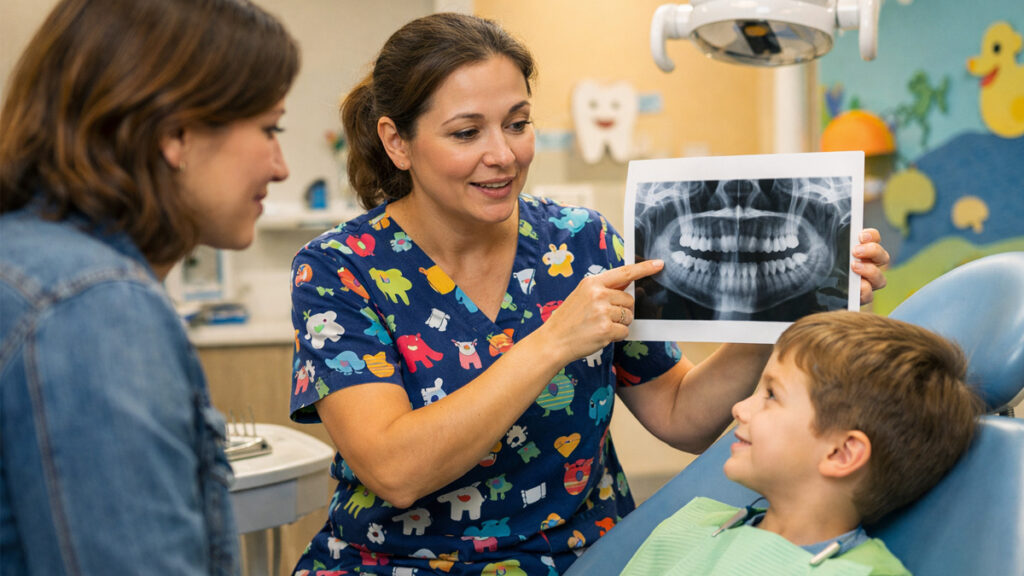
Restorative procedures are where uninsured families feel the financial impact most sharply.
These costs are significantly higher than preventive care and vary considerably based on material choice, tooth location, and provider.
| Procedure | National Average (No Insurance) | NYC-Area Estimate | With Insurance | With Medicaid/CHIP |
|---|---|---|---|---|
| Composite (tooth-colored) filling | $150–$300 per tooth | $200–$400 per tooth | 50–80% covered; $30–$100 out-of-pocket | $0 |
| Amalgam (silver) filling | $75–$150 per tooth | $100–$200 per tooth | 50–80% covered; $20–$60 out-of-pocket | $0 |
| Stainless steel crown (baby tooth) | $300–$700 per tooth | $400–$900 per tooth | 50–80% covered; $60–$200 out-of-pocket | $0 |
| White (zirconia) crown (baby tooth) | $500–$1,200 per tooth | $700–$1,500 per tooth | Partially covered; often higher out-of-pocket | $0 (covered when medically necessary) |
| Simple tooth extraction | $100–$250 | $150–$350 | 50–80% covered; $20–$80 out-of-pocket | $0 |
| Surgical extraction | $200–$400+ | $300–$600+ | 50–80% covered; $40–$150 out-of-pocket | $0 |
| Pulpotomy (baby root canal) | $200–$500 | $300–$700 | 50–80% covered; $50–$150 out-of-pocket | $0 |
| Silver Diamine Fluoride (SDF) | $75–$150 per treatment | $100–$200 per treatment | Increasingly covered; varies by plan | $0 (expanded to all ages Jan 2025) |
The most important number in this table for Queens families is the Medicaid column: every procedure above is covered at $0 for enrolled children.
If your child has Medicaid or Child Health Plus and has a cavity, a crown, or needs an extraction, the financial barrier is zero.
The challenge is access finding an enrolled provider and getting an appointment not cost.
Our guide to free and low-cost dental care in Queens lists providers by neighborhood.
For uninsured families, the cost trajectory of untreated decay is worth understanding clearly.
A cavity caught at the white-spot (pre-cavity) stage may cost nothing to treat with fluoride varnish and SDF. Left to progress, that same decay becomes a $200–$400 filling.
Left further, it becomes a $400–$900 crown plus a $300–$500 pulpotomy, a single tooth costing $700–$1,400 uninsured.
This is why the AAPD’s twice-yearly checkup recommendation exists: it is financial protection as much as clinical care.
Sedation and Anesthesia: What It Adds to the Bill
Many children, especially toddlers, children with significant dental anxiety, or kids requiring multiple procedures in one visit, receive sedation.
Sedation is not a separate billable line item in the traditional sense; it adds a significant fee on top of the procedure costs above.
| Sedation Type | National Average (Additional Cost) | NYC-Area Estimate | Insurance Coverage |
|---|---|---|---|
| Nitrous oxide (laughing gas) | $50–$150 per visit | $75–$200 per visit | Often covered partially; varies by plan |
| Oral sedation (pill or liquid) | $150–$500 per visit | $200–$700 per visit | Partially covered when medically necessary |
| IV sedation | $500–$1,000 per visit | $700–$1,500 per visit | Variable; requires medical necessity documentation |
| General anesthesia (hospital or surgery center) | $1,500–$4,000+ (facility + anesthesiologist) | $2,000–$6,000+ | Often covered under medical insurance, not dental; complex billing |
Nitrous oxide is the most commonly used and most affordable sedation option for children.
It wears off within minutes after the mask is removed, requires no recovery time, and adds a modest fee to the visit.
General anesthesia is reserved for very young children, those with special needs, or cases requiring extensive work and billing that crosses into medical insurance territory, often requiring separate prior authorization.
For children with significant dental anxiety, the real cost of avoiding treatment, escalating decay, emergency visits, and more complex procedures, almost always exceeds the cost of sedation done proactively.
Understanding how dental anxiety in children is managed helps parents navigate both the behavioral and financial dimensions of this decision.
Orthodontic Treatment Costs for Children
Orthodontic treatment represents the largest potential out-of-pocket cost in pediatric dental care.
Most dental insurance plans provide a lifetime orthodontic benefit rather than annual coverage, meaning they pay a fixed amount toward braces once per lifetime, regardless of when treatment occurs.
| Treatment Type | National Average (No Insurance) | NYC-Area Estimate | Insurance Lifetime Benefit | Medicaid Coverage |
|---|---|---|---|---|
| Traditional metal braces | $3,000–$5,500 | $4,000–$7,000 | $1,000–$2,000 typical lifetime max | Covered when medically necessary |
| Clear aligners (Invisalign Teen) | $3,500–$6,500 | $5,000–$8,000 | $1,000–$2,000 (same as braces) | Not typically covered |
| Phase 1 early orthodontics (ages 6–10) | $1,500–$3,000 | $2,500–$4,500 | Counts against lifetime max if used | Covered when medically necessary |
| Palate expander | $1,500–$3,000 | $2,000–$4,000 | Partially covered | Covered when medically necessary |
| Retainer (after braces) | $150–$600 | $200–$800 | Often covered partially | Covered |
Many orthodontic practices offer in-house financing plans, spreading the cost over the treatment period (typically 18–24 months) with no interest.
This is distinct from dental insurance; it is a payment arrangement directly with the orthodontist.
Most NYC-area orthodontists accept this model, and it is worth asking about before comparing treatment facilities.
The existing article on how much dental braces cost covers the orthodontic cost landscape in more depth.
For parents wondering whether their child needs orthodontic treatment at all, the AAPD recommends an orthodontic evaluation by age 7, early enough to intercept problems before they become more expensive to fix.
How Dental Insurance Affects What You Actually Pay
Commercial dental insurance for children typically follows a 100/80/50 structure:
- 100% covered: Preventive care cleanings, exams, X-rays, fluoride varnish, and often sealants for children under 14
- 80% covered: Basic restorative care fillings, simple extractions
- 50% covered: Major restorative care crowns, pulpotomies, surgical extractions
Most plans have an annual maximum benefit of $1,000–$2,000 per child.
Once your child hits that maximum, you pay 100% of costs for the rest of the calendar year.
This is why parents of children with multiple cavities or complex dental needs can still face significant out-of-pocket costs even with good insurance.
Key insurance questions to ask before any pediatric dental procedure:
- Is this dentist in-network for my plan? (Out-of-network providers can cost 2–4x more)
- Has our annual maximum been reached?
- Does this procedure require prior authorization?
- What is the exact covered percentage for this procedure code?
- Is there a waiting period for major services under our plan?
For a comprehensive overview of how different insurance types, commercial, Medicaid, and CHIP, apply to pediatric dental care, our guide to pediatric dental insurance coverage breaks down each plan type in detail.
Ways to Reduce Pediatric Dental Costs
Whether you have insurance or not, several strategies can meaningfully reduce what your family pays for children’s dental care:
- Apply for Medicaid or Child Health Plus. If there is any chance your child qualifies, household income up to approximately 400% of the Federal Poverty Level, for Child Health Plus, apply first. All preventive and most restorative care is $0. Enrollment is open year-round at nystateofhealth.ny.gov or by calling 1-855-355-5777. Our guide to Medicaid dental coverage for kids in New York covers exactly what’s included.
- Use community health centers. Federally Qualified Health Centers in Queens, including the Joseph P. Addabbo Family Health Center network and Charles B. Wang Community Health Center, charge on a sliding-fee scale based on income. Uninsured families at the lowest income levels pay nothing. Phone: Addabbo 718-945-7150, CBWCHC 718-587-1111.
- Stay in-network. For insured families, choosing an in-network provider vs. an out-of-network provider can cut costs by 40–60% on the same procedure. Always verify network status before the appointment, not after.
- Prioritize preventive visits. Two annual cleanings catch cavities at the least expensive treatment stage. Missing one cleaning and discovering a cavity that needs a crown is a $300–$600 difference on a single tooth.
- Ask about dental savings plans. Some practices offer in-house membership plans (not insurance) covering annual cleanings, exams, and X-rays for a flat annual fee of $150–$300, with discounts on restorative procedures. Useful for uninsured families who do not qualify for Medicaid.
- Use CareCredit or a similar healthcare financing. These 0% interest (if paid within promotional period) credit lines are accepted at most dental offices and allow spreading large bills over 12–24 months without interest charges.
The Bottom Line on Pediatric Dental Costs
Without insurance in the NYC area, a child’s annual routine dental care (two exams, two cleanings, X-rays, fluoride) costs approximately $400–$600 per year.
A single untreated cavity that progresses to a crown and pulpotomy can add $700–$1,400 to that in one visit. With Medicaid or Child Health Plus, every one of those costs is $0.
With commercial insurance following the 100/80/50 model, preventive care is free, and restorative procedures require only a copay.
The financial case for staying current on preventive visits and for enrolling in any available coverage is overwhelming.
If cost has been the barrier for your child, start with a Medicaid eligibility check at nystateofhealth.ny.gov before assuming you need to pay full price.
Frequently Asked Questions About Pediatric Dental Costs
How much does a pediatric dentist cost for a first visit?
A first dental visit, which includes an exam, cleaning, and usually X-rays, costs $75–$250 without insurance at a typical NYC-area pediatric dental office.
With commercial dental insurance, the first visit is usually $0 or a small copay.
With Medicaid or Child Health Plus, it is $0. The AAPD recommends the first visit by age 1, when treatment is minimal, and costs are at their lowest.
Does dental insurance cover all pediatric dental procedures?
No. Most commercial dental plans follow a 100/80/50 structure: 100% for preventive (cleanings, X-rays, fluoride), 80% for basic restorative (fillings, simple extractions), and 50% for major restorative (crowns, pulpotomies).
Cosmetic procedures are not covered. Orthodontics has a separate lifetime maximum benefit.
Annual plan maximums of $1,000–$2,000 mean families with multiple or complex dental needs can still face significant out-of-pocket costs.
Are fillings in baby teeth covered by insurance?
Yes, fillings in baby teeth are covered by most dental insurance plans at the same rate as fillings in permanent teeth, typically 80% of the cost after any deductible.
Some plans limit the number of fillings covered per year or per tooth.
Medicaid and Child Health Plus cover fillings in baby teeth at $0 with no limit.
Baby teeth fillings are worth doing: untreated cavities in baby teeth cause pain, affect eating and speech, and can damage the developing permanent tooth underneath.
How much do dental sealants cost per tooth for a child?
Dental sealants cost $30–$60 per tooth nationally, and $50–$80 per tooth in the NYC area without insurance.
Most commercial dental plans cover sealants at 100% for children under age 14, making them effectively free with insurance.
Under Medicaid and Child Health Plus, they are $0 at any age.
Given that sealants reduce molar cavity risk by approximately 80% according to CDC data, they are among the highest-ROI dental procedures available.
What happens if I can’t afford my child’s dental treatment?
Start by checking Medicaid and Child Health Plus eligibility; many families are eligible without realizing it.
If your child is already uninsured and ineligible for public programs, contact the Joseph P. Addabbo Family Health Center (718-945-7150) or NYC Health + Hospitals/Queens (718-883-3270), both of which offer sliding-scale fees regardless of insurance status.
Ask your dentist about payment plans and CareCredit financing.
Delaying treatment almost always increases the eventual cost.
A cavity treated today is a fraction of the cost of the crown or extraction it becomes in six months.
Sources
- Junior Smiles of Stafford How Much Does a Pediatric Dentist Visit Cost? (April 2025)
- Lake Country Dental The Cost of Pediatric Dentistry (March 2025)
- Kids Dental Office of Phoenix How Much Is a Pediatric Dentist Visit Without Insurance? (February 2025)
- Humana Costs of Common Dental Procedures
- Absolute Dental Child Dental Care Without Insurance (November 2024)
- Centers for Disease Control and Prevention Dental Sealants
- American Academy of Pediatric Dentistry Periodicity of Examination and Preventive Dental Services
Mary – Queens Pediatric Dental Resource Manager. I’m a dental health researcher and parent advocate based in Queens, NY. After struggling to find reliable pediatric dental information during my own child’s dental emergency, I created this resource to help other Queens families navigate their children’s oral health needs.
I curate evidence-based information from leading pediatric dental organizations, peer-reviewed research, and trusted dental health experts. While I’m not a dentist, I’m committed to providing accurate, practical guidance that helps parents make informed decisions.
All content is thoroughly researched and includes proper medical disclaimers directing families to consult qualified pediatric dentists for their children’s specific needs.