Nutrition & Oral Health for Children – Complete Guide 2026

Header image featuring the text "NUTRITION & ORAL HEALTH FOR CHILDREN" and "FUELING HEALTHY SMILES" in a friendly font, with fruit and tooth icons.

Quick Answer What children eat and drink directly impacts their dental health—often more than brushing habits alone. The best foods for teeth are those high in calcium (dairy, leafy greens), phosphorus (meat, eggs, nuts), and fiber (crunchy fruits and vegetables). The worst are sticky sweets, frequent sugary drinks, and acidic beverages that erode enamel. The … Read more

Special Pediatric Dental Topics – Complete Guide 2026

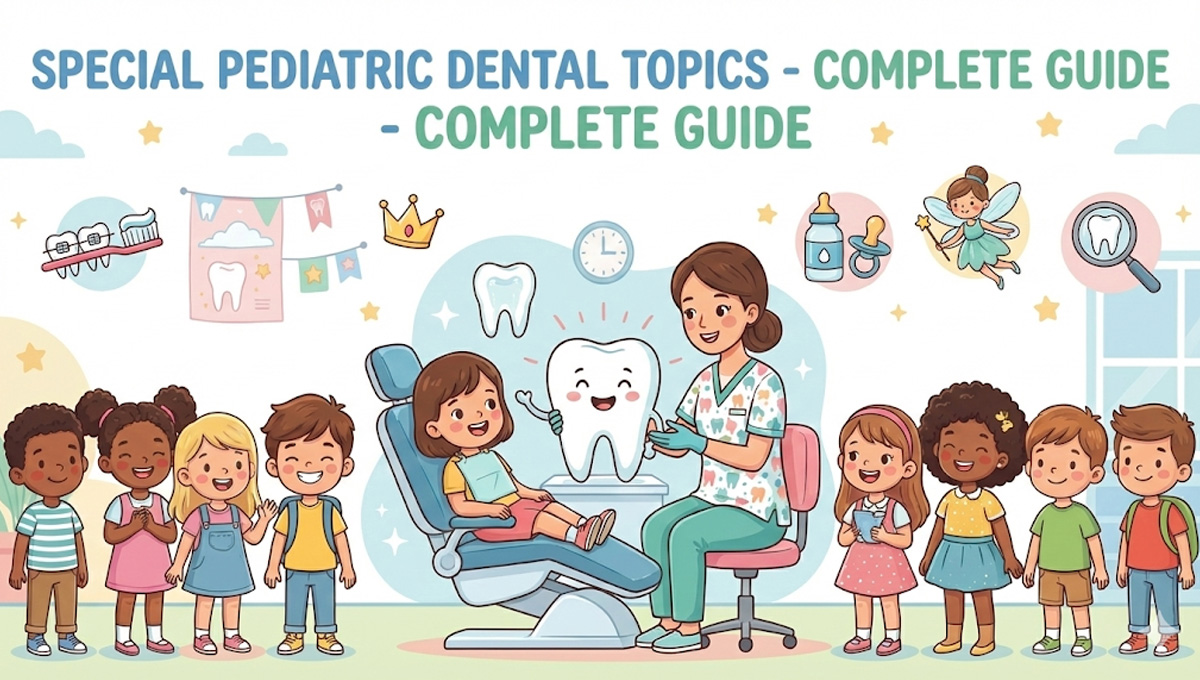
Illustration of pediatric dentist treating a child with smiling kids around, representing a complete guide to pediatric dental topics and children’s oral care

Quick Answer Several dental conditions can affect children’s oral health beyond cavities and gum disease—including tongue tie, teeth grinding (bruxism), fluorosis, enamel hypoplasia, and mouth breathing effects. Many of these conditions are more common than parents realize and may impact feeding, speech, sleep, or tooth development. Early identification allows for timely intervention when needed, though … Read more

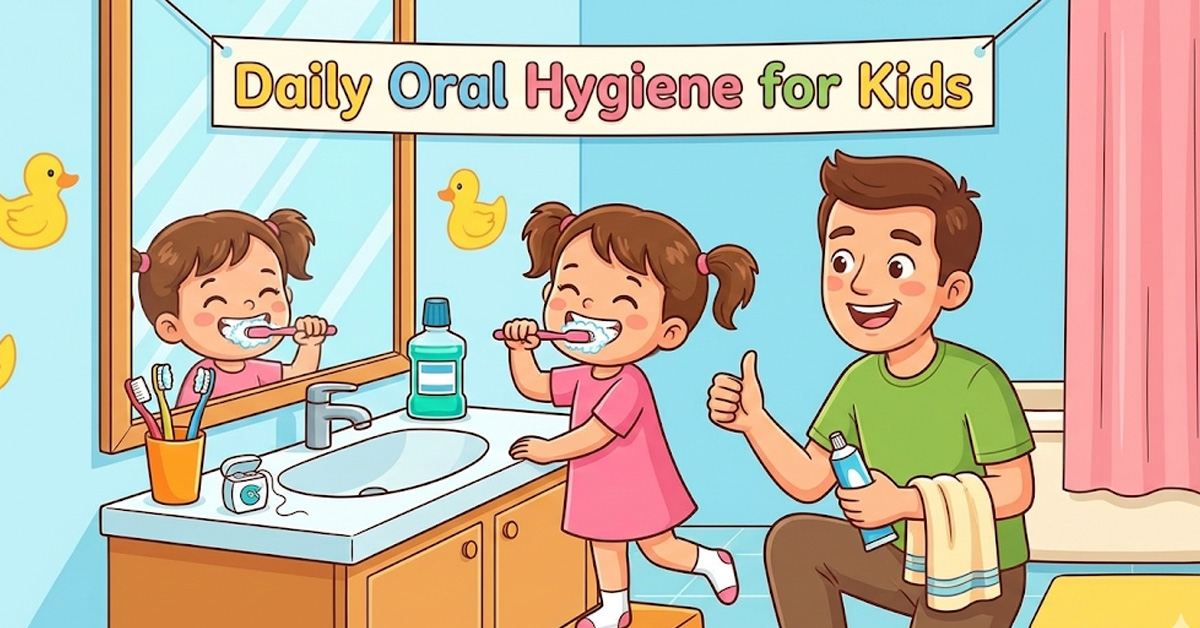
Daily Oral Hygiene for Kids

Father encouraging his daughter to brush her teeth in a bathroom, illustrating a daily oral hygiene routine for kids.

Quick Answer Start cleaning your baby’s mouth from birth by wiping gums with a soft cloth, then switch to brushing with fluoride toothpaste when the first tooth appears. Use a rice-grain-sized smear of toothpaste for children under 3, and a pea-sized amount for ages 3-6. Parents should brush or supervise brushing until at least age … Read more

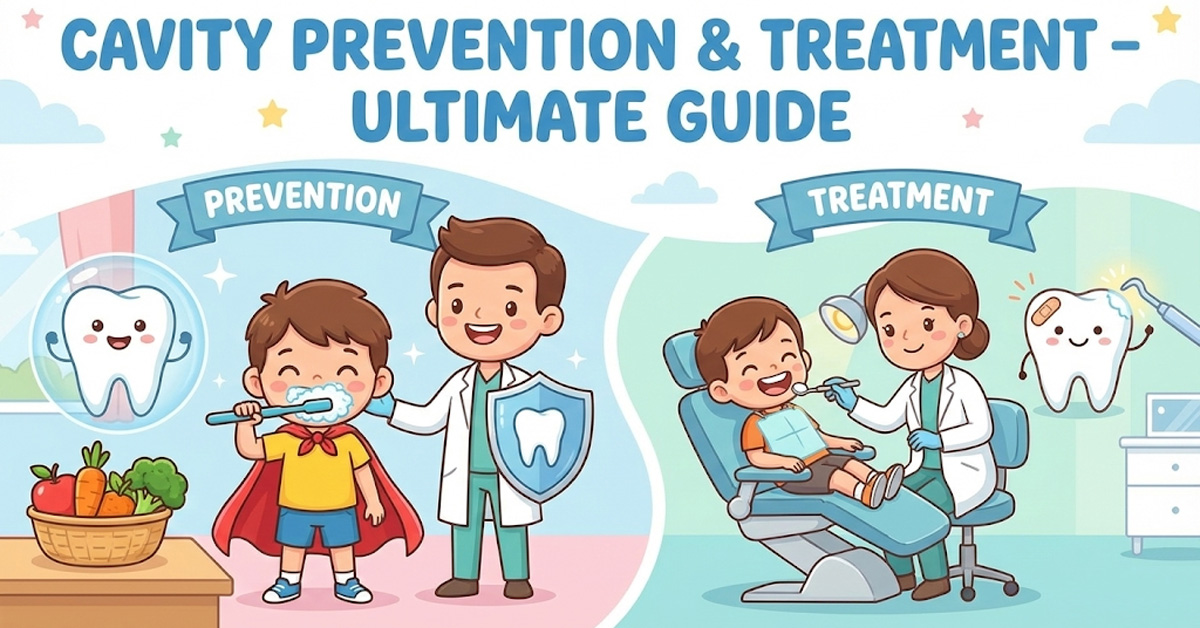
Cavity Prevention & Treatment – Ultimate Guide 2026

Illustration showing cavity prevention and dental treatment for children, with a dentist, tooth decay example, toothbrush, toothpaste, and baby dental care items

Quick Answer Cavities (tooth decay) are caused when bacteria in the mouth produce acids that dissolve tooth enamel. They’re the most common chronic childhood disease—affecting 23% of children ages 2-5—but they’re almost entirely preventable with proper brushing, fluoride, limited sugar, and regular dental visits. Yes, cavities in baby teeth usually need treatment to prevent pain, … Read more

Baby Teeth Development Guide

Smiling baby and cartoon teeth illustration focused on baby teeth development.

Quick Answer Babies typically get their first tooth around 6 months of age, with all 20 primary (baby) teeth usually appearing by age 3. Children begin losing baby teeth around age 6, with the last baby teeth falling out between ages 10-12. While there’s a general order to tooth eruption and loss, every child’s timeline … Read more

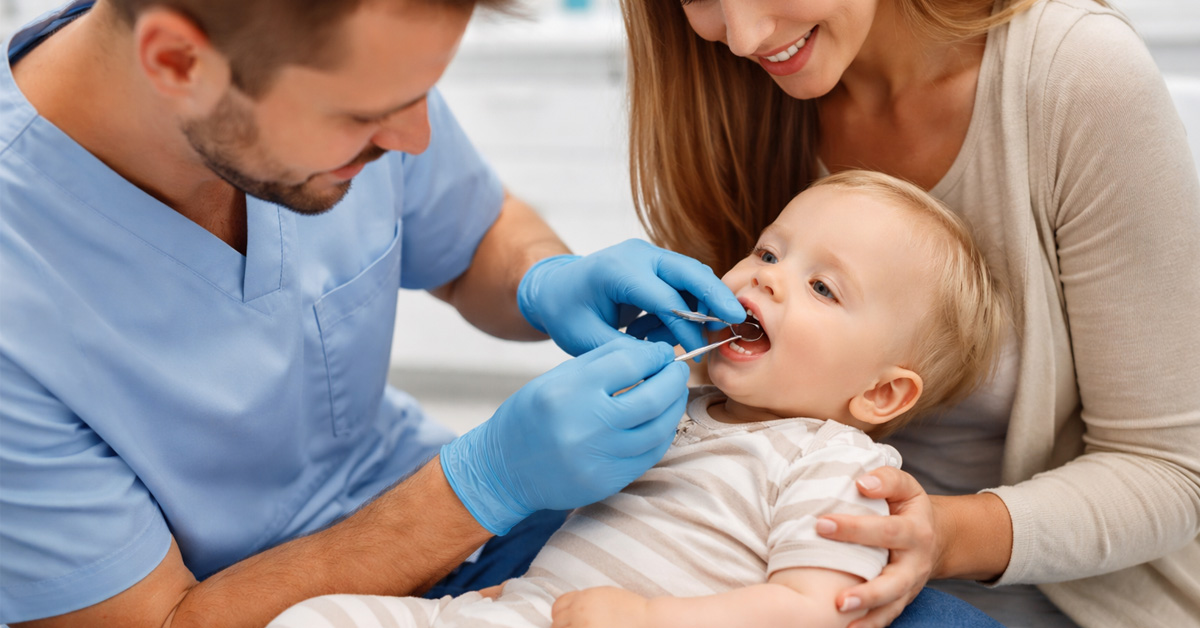
Your Child’s First Dental Visit: The Complete 2026 Guide

Pediatric dentist examining a baby's teeth using the knee-to-knee method while the parent holds the baby and the mother watches.

Quick Answer Children should have their first dental visit by age 1 or within 6 months of their first tooth appearing—whichever comes first. The American Academy of Pediatric Dentistry (AAPD) recommends this timeline to establish a “dental home,” catch problems early, and help children develop positive associations with dental care before any treatment becomes necessary. … Read more