Reviewed by our dental health editorial team | Last Updated: March 2026
Nearly 1 in 3 children in New York State is enrolled in Medicaid or Child Health Plus, and most of their parents don’t realize that comprehensive dental care is included at zero out-of-pocket cost.
If your child has Medicaid in New York, they are entitled to cleanings, X-rays, fillings, extractions, and more, with no monthly premium and no deductible.
Yet dental disease remains the most common chronic childhood condition, suggesting millions of covered kids are not using the benefits they already have.
This guide explains exactly what New York Medicaid covers for children’s teeth, who qualifies, how to enroll, and what is changing in 2026 that every Queens family should know about.
KEY TAKEAWAYS
- Zero cost to families: New York Medicaid and Child Health Plus provide dental coverage for children with no monthly premium, no deductible, and minimal cost-sharing.
- Comprehensive services covered: Covered benefits include preventive cleanings, X-rays, fluoride treatments, fillings, extractions, crowns, and, as of January 2025, Silver Diamine Fluoride for all ages.
- Year-round enrollment: Unlike commercial insurance, Medicaid and Child Health Plus accept new applications every day of the year through NY State of Health.
- Income thresholds are generous: A family of four earning up to approximately $40,000 per year may qualify for Medicaid; Child Health Plus extends coverage to families earning significantly more.
- Federal changes ahead: New federal legislation introduces work requirements and more frequent eligibility reviews starting in late 2026. Families should verify their enrollment status now.
Medical disclaimer: This article provides general information about Medicaid dental benefits for children in New York. It does not replace professional dental or medical advice. Eligibility rules and benefit details may change. Always confirm current coverage directly with your Medicaid plan or NY State of Health.
What Is Medicaid Dental Coverage for Children in New York?
New York Medicaid is a state and federally funded health insurance program for low- and moderate-income residents.
For children under age 19, dental care is a mandatory covered benefit, meaning the state is required by federal law to provide it.
New York goes further than the federal minimum, offering one of the most comprehensive children’s dental benefit packages in the country.
Dental benefits for children enrolled in New York Medicaid include all of the following with no out-of-pocket cost:
| Service Category | What Is Covered |
|---|---|
| Preventive care | Routine checkups, professional cleanings, fluoride varnish treatments, and dental X-rays |
| Restorative care | Fillings (composite and amalgam), stainless steel crowns, white crowns |
| Oral surgery | Simple and surgical tooth extractions |
| Preventive fluoride treatment | Silver Diamine Fluoride (SDF) expanded to all ages as of January 1, 2025 |
| Emergency dental care | Pain relief, treatment of infection, and emergency extractions |
| Orthodontics | Covered when medically necessary; must be provided by a board-certified or board-eligible orthodontist |
The expansion of Silver Diamine Fluoride to all Medicaid patients regardless of age is a significant 2025 upgrade.
SDF is a painless liquid applied directly to teeth that stops cavity progression without drilling, making it especially valuable for young children and kids with dental anxiety.
According to the New York State Department of Health’s 2026 Dental Policy and Procedure Manual, all dental providers enrolled in the Medicaid program are eligible for reimbursement for all covered service types.
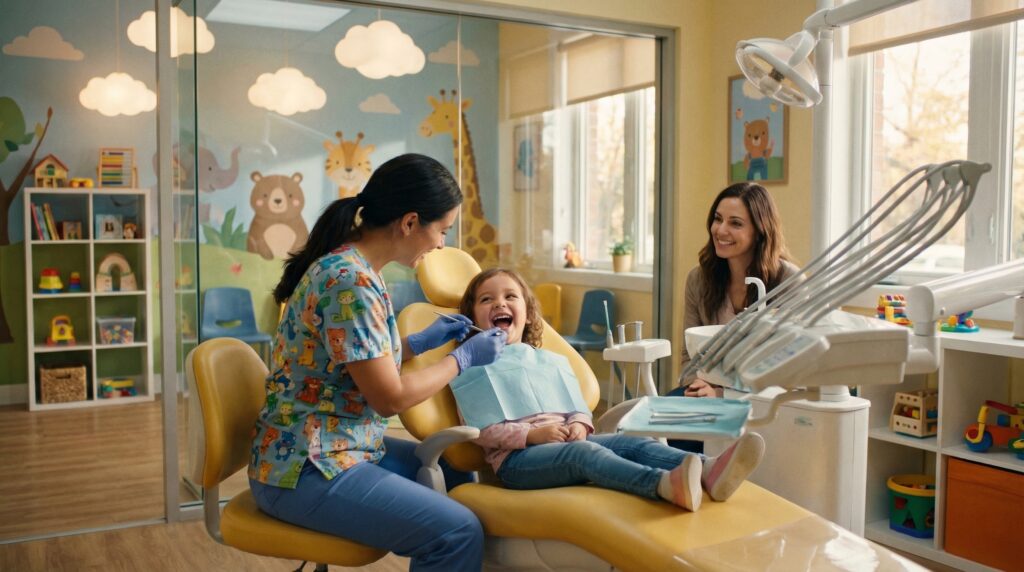
There is no difference in reimbursement between general practitioners and specialists, which means your child can be seen by a pediatric dental specialist under Medicaid at no additional cost to you.
Who Qualifies for Medicaid Dental Benefits in New York?
Children under age 19 who meet New York Medicaid income and residency requirements are eligible for full dental benefits.
For 2026, the income eligibility thresholds are based on the Federal Poverty Level (FPL).
A family of four earning up to approximately 138% of the FPL, roughly $42,000 per year, qualifies for Medicaid.
Children-only eligibility thresholds are higher, meaning children in households earning more than the adult threshold may still qualify.
Residency requirements are straightforward: the child must live in New York State and be a U.S. citizen, a qualifying immigrant, or meet other immigration status criteria established by the state.
Documentation of income and residency is required at enrollment.
Children who do not qualify for Medicaid due to household income may still be eligible for Child Health Plus (CHP), New York’s version of the Children’s Health Insurance Program (CHIP).
Child Health Plus extends coverage to uninsured children in families with income above the Medicaid threshold, up to approximately 400% of the FPL, depending on the child’s age.
According to the New York State of Health Marketplace, Child Health Plus provides dental benefits with no monthly premium, no deductible, and low cost-sharing, nearly identical to full Medicaid dental coverage.
For families unsure whether their child qualifies for Medicaid or Child Health Plus, both programs can be applied for through the same enrollment channel, and eligibility is determined automatically.

Understanding how pediatric dental insurance works across different plan types can help you determine which program fits your family’s situation before you apply.
How Does Medicaid Managed Care Affect Dental Benefits?
Most children enrolled in New York Medicaid receive their benefits through a Medicaid Managed Care plan rather than through fee-for-service Medicaid directly.
This distinction matters when choosing a dentist.
Under Medicaid Managed Care, children are enrolled in a specific health plan such as Healthfirst, MetroPlus, Fidelis Care, or WellCare, and dental benefits are administered through that plan’s dental network.
For example, Healthfirst Medicaid contracts with DentaQuest to manage dental benefits for its members.
This means your child’s dentist must be enrolled in your specific Medicaid Managed Care plan’s dental network, not just enrolled in Medicaid generally.
The practical impact for Queens families:
- Call your child’s Medicaid plan to get a list of in-network pediatric dentists in Queens before scheduling
- You do not need a referral from your child’s primary care doctor to see a dentist under Medicaid Managed Care
- If you cannot find an in-network dentist, contact your plan; they are required to assist you in locating a participating provider
- Children not enrolled in Managed Care (fee-for-service Medicaid) can see any dentist enrolled in the New York State Medicaid program
The New York City Human Resources Administration publishes a Medicaid dental provider list for Queens families on fee-for-service Medicaid.

This list includes dozens of providers in multiple languages, reflecting Queens’ diverse population.
How to Enroll Your Child in Medicaid Dental Coverage
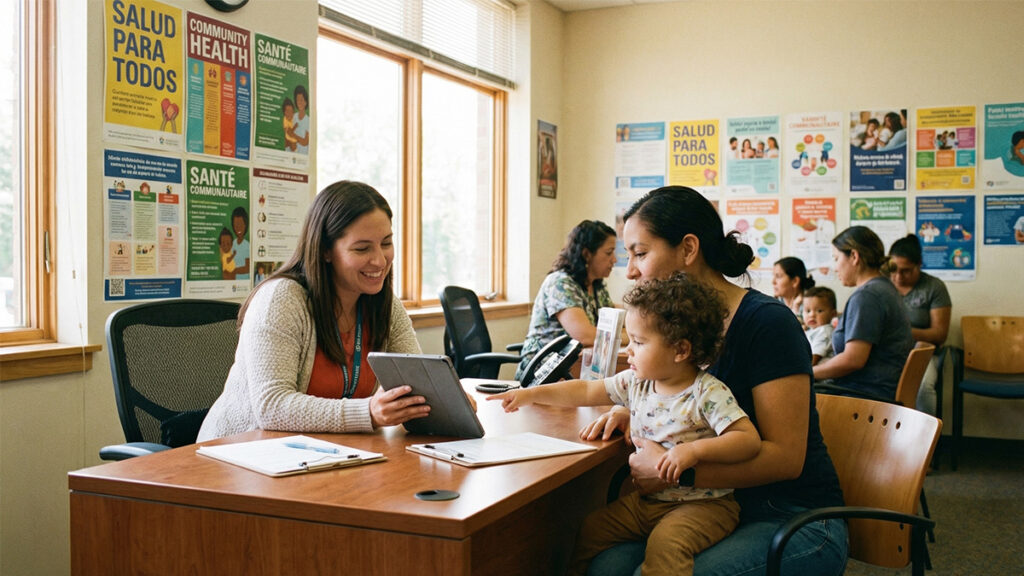
One of the most parent-friendly features of New York Medicaid and Child Health Plus is that enrollment is open year-round.
Unlike commercial dental plans, there is no annual open enrollment window; you can apply any day of the year.
The primary enrollment channel is NY State of Health, New York’s official health plan marketplace.
You can apply online at nystateofhealth.ny.gov, by phone at 1-855-355-5777 (Monday–Friday 8 am–8 pm, Saturday 9 am–1 pm), or in person through a certified enrollment assistor in your neighborhood.
Documents you will typically need to enroll:
- Proof of identity (birth certificate, passport, or other government-issued ID)
- Proof of New York State residency (utility bill, lease, or school enrollment record)
- Proof of income (pay stubs, tax return, or employer letter)
- Immigration documentation, if applicable
- Social Security numbers for household members applying for coverage
Once enrolled, dental benefits are active immediately. You do not need to wait for an insurance card to make a dental appointment.
The dentist’s office can verify coverage directly through the state’s eMedNY system using your child’s Medicaid ID number.
Taking your child to their first dental appointment as early as age 1 is recommended by both the American Academy of Pediatric Dentistry and the American Academy of Pediatrics. New York Medicaid covers this visit in full.
What Changes Are Coming to Medicaid in 2026 and 2027?
Federal legislation passed in 2025, the One Big Beautiful Bill Act, introduces several changes to Medicaid that Queens families should be aware of now, before they take effect.
Work requirements (effective no later than Q1 2027): Adults who are parents of children over age 13 will be required to work, attend school, or volunteer for at least 80 hours per month to maintain Medicaid eligibility.
Parents of children under 13 are exempt from this requirement, as are individuals with documented disabilities and several other categories.
However, parents of teenagers a significant portion of Queens families on Medicaid will need to document their qualifying activity to avoid losing coverage.
Six-month eligibility redeterminations (effective by December 31, 2026): Currently, New York reviews Medicaid eligibility once per year. Under the new federal rules, states must verify eligibility every six months.
This means families will need to provide updated income and residency documentation twice a year instead of once.
Missing a redetermination notice, which often happens when contact information is outdated, can result in coverage being interrupted.
What Queens families should do now:
- Log in to your NY State of Health account and confirm your contact information (address, phone number, email) is current
- Respond promptly to any renewal or redetermination notices from your Medicaid plan
- If your child’s dental care has a gap, schedule an appointment before potential coverage disruptions in late 2026
- Untreated cavities can escalate quickly. Understanding how cavities develop in children helps parents prioritize care before any coverage gaps occur
According to the New York State Dental Association, New York has historically been a leader in protecting Medicaid dental access, but the new federal provisions could force the state to reconsider reimbursement rates and service coverage over time.
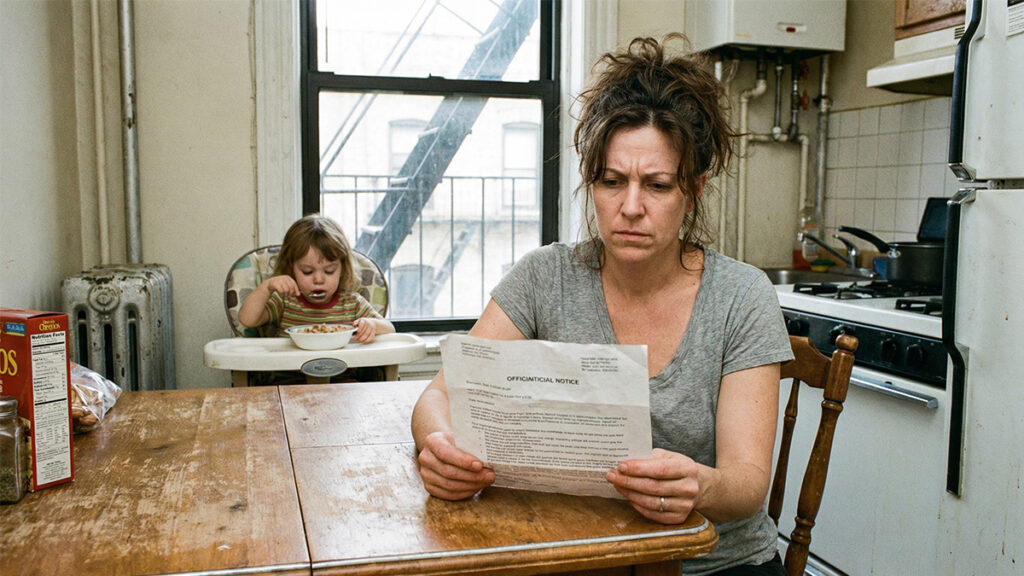
Advocacy organizations are actively tracking these changes.
Why Children’s Dental Care Cannot Wait
Dental disease is the most common chronic condition among children in the United States, affecting approximately 45% of children by age 11, according to the Centers for Disease Control and Prevention.
In Queens, one of the most ethnically diverse counties in the country, rates of untreated childhood dental disease are above the national average in many neighborhoods, particularly among children in Medicaid-eligible households.
The consequences of untreated dental disease extend well beyond a child’s mouth.
A 2024 cohort study published in the European Journal of Preventive Cardiology, examining over 568,000 children, found that early childhood cavities and gum disease were significantly associated with elevated risk of cardiovascular disease and type 2 diabetes in adulthood.
Children who miss school due to dental pain are more likely to fall behind academically.
And dental emergencies that go untreated can become serious infections requiring emergency dental care, a much more stressful and expensive outcome than a routine checkup would have prevented.
New York Medicaid removes the financial barrier entirely.
The remaining barrier is awareness, and the next step for every Queens parent is simply making the appointment.
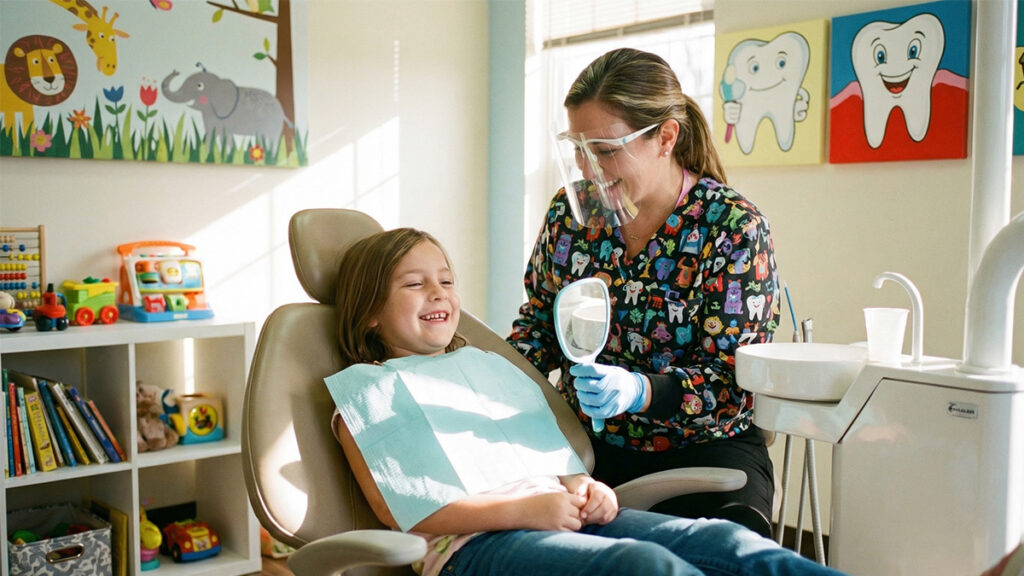
Finding a Pediatric Dentist in Queens Who Accepts Medicaid
Finding a dentist who accepts Medicaid and specifically your child’s Medicaid Managed Care plan is the most common practical challenge Queens parents face.
Here are the most reliable ways to locate a provider:
- Call your Medicaid plan directly. Ask for their pediatric dental provider directory for Queens. Managed care plans are required to maintain up-to-date directories and to help you find a participating provider.
- Use the NY State of Health provider search at nystateofhealth.ny.gov. Filter by plan, specialty (pediatric dentistry), and your zip code.
- Contact the NY State Medicaid dental helpline at 1-800-541-2831 for fee-for-service Medicaid members.
- Check community health centers, Federally Qualified Health Centers (FQHCs) in Queens, that accept Medicaid for all patients regardless of which managed care plan they are enrolled in. Examples include the Joseph P. Addabbo Family Health Center and the Charles B. Wang Community Health Center.
When calling a dental office to book, confirm two things: that the office accepts Medicaid AND that they participate in your specific managed care plan.
These are different questions.
A dentist may be enrolled in Medicaid generally, but not contracted with your child’s specific plan.
Maintaining consistent dental care from early childhood is the single most effective strategy for preventing the expensive treatments that come from untreated decay.
Understanding age-appropriate oral hygiene habits at home complements every dental visit and keeps coverage costs and future treatment needs as low as possible.
The Bottom Line on Medicaid Dental for Kids in New York
New York Medicaid and Child Health Plus offer some of the most comprehensive children’s dental benefits in the nation at zero cost to eligible families.
Cleanings, X-rays, fillings, Silver Diamine Fluoride, emergency care, and more are all covered. Enrollment is open every day of the year.
If your child is uninsured or you are unsure whether you qualify, call NY State of Health at 1-855-355-5777 or visit nystateofhealth.ny.gov today.
Federal changes arriving in late 2026 make this a good time to verify your enrollment is current before any disruptions can affect your child’s access to care.
Frequently Asked Questions About Medicaid Dental for Kids in New York
Does my child need a referral to see a dentist under Medicaid?
No. Under New York Medicaid Managed Care, children do not need a referral from their primary care doctor to see a dentist.
You can contact a participating dental office directly to schedule an appointment.
At what age does Medicaid dental coverage start for children in New York?
Coverage begins at birth.
New York Medicaid covers dental care for children from infancy through age 18, and the American Academy of Pediatric Dentistry recommends the first dental visit by age 1 or within 6 months of the first tooth appearing, all of which is covered at no cost under Medicaid.
Does New York Medicaid cover braces for children?
Orthodontic treatment, including braces, is covered under New York Medicaid when it is deemed medically necessary.
Treatment must be provided by a board-certified or board-eligible orthodontist.
Cosmetic orthodontic treatment is not covered. Prior authorization is required in most cases.
What if my child has Medicaid, but the dentist says they don’t accept it?
Call your Medicaid plan and ask them to help you find an in-network provider.
Your plan is required by law to provide access to covered services within a reasonable distance from your home.
You can also call NY State of Health at 1-855-355-5777 for assistance.
How will the 2026 Medicaid work requirements affect my child’s dental coverage?
Work requirements apply to adult enrollees, specifically parents with children over age 13, not to the children themselves.
However, if a parent loses Medicaid coverage due to work requirements, the family should immediately check whether the child qualifies for coverage under Child Health Plus, which has different eligibility rules and no work requirement for children.
Can undocumented children receive Medicaid dental care in New York?
New York’s Emergency Medicaid program covers emergency dental services for individuals regardless of immigration status.
For broader Medicaid eligibility, certain immigration statuses qualify for full benefits.
Families with questions about immigration status and coverage should contact a certified enrollment assister through NY State of Health for confidential guidance.
Sources
- New York State Department of Health Medicaid Dental Benefits for Members
- New York State Medicaid 2026 Dental Policy and Procedure Manual (eMedNY)
- NY State of Health 2026 Open Enrollment Announcement with Enhanced Dental Benefits (November 2025)
- New York State Dental Association Status of Medicaid Dental Benefits and Federal Legislative Impact
- Healthfirst Medicaid Managed Care Dental Benefits in New York
- Centers for Disease Control and Prevention Oral Health Facts and Data
- NY State of Health Official Health Plan Marketplace Enrollment Portal

Mary – Queens Pediatric Dental Resource Manager. I’m a dental health researcher and parent advocate based in Queens, NY. After struggling to find reliable pediatric dental information during my own child’s dental emergency, I created this resource to help other Queens families navigate their children’s oral health needs.
I curate evidence-based information from leading pediatric dental organizations, peer-reviewed research, and trusted dental health experts. While I’m not a dentist, I’m committed to providing accurate, practical guidance that helps parents make informed decisions.
All content is thoroughly researched and includes proper medical disclaimers directing families to consult qualified pediatric dentists for their children’s specific needs.